
January 24, 2012

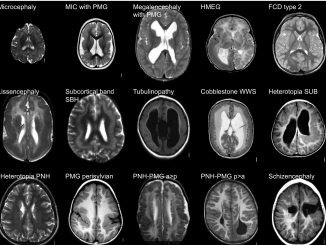
Dr. Dobyns Seattle Research - Free MRI Review

Dr. Dobyns moved his research lab and all projects to Seattle, WA in 2010.

2012 Update:

Yes, Dr. Dobyns is still doing research on pachygyria as well as providing free reviews of MRI’s. The information is on the website or you can contact Hailly directly. The website has the MRI request information listed.

Hailly Butler, BS, CCRP
Clinical Research Associate
Seattle Children¹s Hospital Research Institute
Center for Integrative Brain Science
1900 Ninth Avenue Mailstop C9S-10
Seattle WA 98101

(206) 884-1277 office
(206) 884-1210 fax

hailly.butler@seattlechildrens.org

NEW Website http://depts.washington.edu/dlab/home.php

The website also lists interesting information on Dr. Dobyns research, publications and so much more.

Continue reading "Dr. Dobyns Seattle Research - Free MRI Review" »

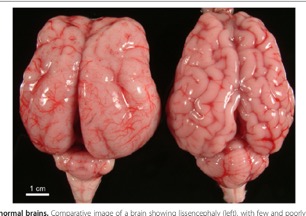
Will my next child have Pachygyria?

This has been a big question asked many times on this site and rightfully so.

We all want our children to be healthy and have the best outcome in life. Yet we would never not want our child who has Pachygyria. We love them dearly. Do we have another child or play it safe without? How will we know?

The best way to find out is to have genetics done on your child. Talk with the genetic specialist who will be able to look at your history and the genetic test outcome.

I was already pregnant with Ashley when we found out Corey had Cerebral Palsy. It wasn't till years later the final diagnosis was given or put into the words of Pachygyria. Ashley is a typical, healthy child.

We did do genetics on Corey to find out the likelihood Ashley would carry it on to her future children and I was interested in the research programs. Emory Genetics did the first test which was negative. Univ. of Chicago did the second test which was also negative. Dr. Dobyns research did several other tests which also came out negative. I think that was a good sign for Ashley being typical. It is likely that her children will also be typical. The doctors did not have information on what would happen if Corey had children.

Later we found it was reassuring to family members who were contemplating getting pregnant and wanted to know if they could also have a child with Pachygyria.

On the other side, there are families that do have multiple children with Pachygyria. From my conversations with the research doctors, it seems the families with multiple cases have genetic markers found in the first test or two. India families that are intermarried have many children with Pachygyria and large families, sometimes 6 children with Pachygyria in one family. That is mainly where the researchers go for candidates to test. I have heard of a family in the US with multiple members having Pachygyria but I do not know if it was a mild case or the genetic results.

From the current families with mild cases on this site, they all have typical children beforehand and/or after.

It would be interesting and helpful for other families to add their point of view and information they have gathered on this subject. Thank you!

PS. If you do go through genetic testing, consider signing up for one or more of the Pachygyria research programs. It would be wonderful to have a cure or more readily available information on Pachygyria. Check into the research requirements first prior to doing the genetic testing. They may offer it for free or need a sample of the blood along with the results from the lab.

November 16, 2011

The Next Stop - Social Community for Adults

The Next Stop

The Next Stop is a place where adults with mild to moderate intellectual disabilities in our community can come and continue to have opportunities to socialize, enjoy recreation and learn life skills in a club like setting. The Next Stop is an organization who provides a setting for individuals with special needs to learn life skills, social skills, cooking skills, recreational skills and other skills that facilitate and support higher functioning in all aspects of life.

Mission

To provide a program where adults with mild to moderate intellectual disabilities can enjoy social, recreational and learning opportunities with their peers.


The Next Stop meets Tuesday, Wednesday, Thursday each week from 1:00-5:00 pm.

Members enjoy stimulating afternoons filled with activities designed to support personal interaction, new experiences and fun filled learning.

We are located inside the Suwanee Sports Academy in Suwanee, GA.

162 Woodshyre Ct. (business address), Lawrenceville, GA 30043

404.932.3953

vicki@thenextstop.org

http://www.thenextstop.org

http://www.facebook.com/pages/The-Next-Stop/178811798607?sk=info

Founded August 2006
The Next Stop Foundation, Inc.

October 27, 2011

Behavior Issues and Epilepsy - A Mom's Question

http://my.clevelandclinic.org/multimedia/transcripts/1200_mood-disorders-in-epilepsy.aspx

MOM: My 14-year-old son has a brain injury and subsequently has epilepsy. Aggression has been a problem in the past, although he takes Lamictal® as a mood stabilizer and he takes Tenex® (guanfacine) to help with the side effects of aggression associated with Vimpat® (lacosamide). How do I differentiate adolescent/teen behaviors due to puberty/hormones that need discipline and guidance verses depression that needs treatment/counseling? Since he functions as an 8 to 10-year-old academically and socially, and has other social limitations, some of the emotional issues may stem from lack of social interaction and isolation from "non-disabled" peers. How do I identify the differences?

Dr__Tatiana_Falcone: It is difficult to differentiate which behaviors are related to the epilepsy, which behaviors are related to the hormones, and which behaviors are secondary side effects of the medications. The important question is how much these behaviors are different from his peers and how much these behaviors are affecting his every day social interaction.

Tenex® is a good medication to help with aggression. I believe a social skills group might also be very beneficial.

To differentiate if some of these behaviors are related to the epilepsy, you can create a calendar and track the seizures and the behaviors, and see if the day he is having more seizures he is also having more problems with his behaviors.

Behavior therapy is also a great tool to help with aggressive behavior.

Online Help
http://my.clevelandclinic.org/multimedia/transcripts/1200_mood-disorders-in-epilepsy.aspx

800.223.2273
10 a.m.-1:30 p.m., M-F EST

See site for more information and assistance.

EEG Children's Social Stories and Info

Several sites I used to educate and desensitize Corey to the EEG process.

We also worked on putting on hats of varying tightness, then to rubbing his head to be similar to the EEG application and then to "sticking on wire" with the blue wall poster puddy and strings. With Corey's sensory issues each step takes continuous practice and lots of motivation.


http://www.oneplaceforspecialneeds.com/main/library_eeg_test.html

http://www.maxishare.com/included/docs/eeg_book_printable.pdf


http://www.kidsvideoeeg.com/index.html

October 20, 2011

SeizureTracker.com - Web and Iphone

SeizureTracker.com -

Free online tools to provide people living with epilepsy and their doctors with a better understanding of the relationship between seizure causes or triggers, seizure activity, seizure medications, along with other seizure treatments. Users have the capability of logging seizure activity on their personal computer, on any web enabled mobile device including the iPhone, or on paper forms that correspond to the online logging forms. Reports generated on SeizureTracker.com include detail graphing capabilities and are easily sharable with caregivers.

October 14, 2011

Natural Approaches to Epilepsy

Alternative Medicine Review 2007 (Mar); 12 (1): 9–24

This article reviews research on the use of diet, nutritional supplements, and hormones in the treatment of epilepsy. Potentially beneficial dietary interventions include identifying and treating blood glucose dysregulation, identifying and avoiding allergenic foods, and avoiding suspected triggering agents such as alcohol, aspartame, and monosodium glutamate. The ketogenic diet may be considered for severe, treatment-resistant cases. The Atkins diet (very low in carbohydrates) is a less restrictive type of ketogenic diet that may be effective in some cases. Nutrients that may reduce seizure frequency include vitamin B6, magnesium, vitamin E, manganese, taurine, dimethylglycine, and omega-3 fatty acids.

http://www.chiro.org/research/ABSTRACTS/Epilepsy.shtml

Continue reading " Natural Approaches to Epilepsy" »

October 12, 2011

18-21 Job Training Programs in Gwinnett

STRIVE (Supported Training and Rehabilitative Instruction In Vocational Education)

http://www.gwinnett.k12.ga.us/OaklandSchool/strive.htm

Gwinnett County Public Schools aim to provide students with opportunities and training for a successful future. The school system's STRIVE program helps students reach their potential and become functional members of the community. STRIVE prepares students, ages 18-21, for involvement within their community by providing on-the-job training.

Continue reading "18-21 Job Training Programs in Gwinnett" »

Ten Common Mistakes Parents Make During the IEP Meeting

Ten Common Mistakes Parents Make During the IEP Meeting

by Matt Foley, M.Ed., L.P.C. & DeAnn Hyatt-Foley, M.Ed.

1. Believing the professionals are the only experts.
It can be very intimidating to sit at a table with several educators and professionals. Professionals/Educators do bring a great deal of knowledge and experience to the table. Although most parents do not have a background or degree in education, they have a great deal of knowledge and experience regarding their child. Parents are experts in their own right; they also provide historical information and the big picture from year to year. They know what works and does not work with their child and can be a great asset to the IEP team.
Parents have an intuitive sense as to what is appropriate for their child. After working with parents for nine years, we are still amazed at how parents are usually intuitively correct about what will work for their child. We encourage parents to follow their hunches. If something does not sound right, check it out. Usually after some research, parents will discover their hunch was correct.

2. Not making requests in writing.
Any request a parent makes needs to be in writing. This includes requests for assessments, IEP meetings, correspondence, related services, etc. Written requests are important because they initiate timelines that the school district must follow in response to your request. This will also create a paper trail. When you write a letter be sure to send it certified mail. When you have a discussion by phone with a school official, write a letter that briefly outlines what you talked about. Documenting your conversations helps prevent miscommunication.
Documenting requests (i.e., teaching assistant, speech, etc.) for the IEP committee clarifies to the committee what you are requesting and allows you to use your own words (as opposed to the note taker paraphrasing your request). We encourage parents to type exactly what they think their child needs and list why they think it is educationally necessary. This helps parents think through why they are requesting a service for their child. Have the IEP committee record the written request as part of the IEP minutes. At this point, the IEP committee has one of two choices: the committee can accept or deny the request. If the committee denies the request, then they must follow the procedural safeguards in IDEA and provide written notice of why they are denying the parents’ request. This method makes it difficult for an IEP committee to tell parents “no” without thinking through the options. If the request is not written down, the school district is not obligated to provide the service. Make sure you write it down.

Continue reading "Ten Common Mistakes Parents Make During the IEP Meeting" »

October 9, 2011

Sunday School Learning Guides for Special Needs

Lifeway Special Buddies material was highly recommended to me by a fellow mom. http://www.lifeway.com/n/Ministries/Special-Needs


http://mintools.com/special-needs-ministry-resources.htm


http://ministry-to-children.com/adapting-lessons-for-special-needs/

Continue reading "Sunday School Learning Guides for Special Needs" »

Copyright © 2006 by Candice Lange, All Rights Reserved