
Main

Brain Malformation - Mild Lissencephaly - PACHYGYRIA Archives

December 14, 2009

Corey's 4th Genetic Test by Dr. Dobyns Research

Dr. Dobyn's research lab tested the TUBA1A gene (previous name TUBA3) with normal results. He also came across a couple “cousin” genes that he will try to get tested in another round. This is a genetic test for Lissencephaly and pachygyria.

December 12, 2009

Dr. Dobyns LIS Facts

Dr. Dobyns at the University of Chicago Medical Center is a recognized expert on birth defects of the brain, especially lissencephaly, or smooth brain disorder. Together with David Ledbetter, PhD, former director of the University of Chicago Center for Medical Genetics, Dr. Dobyns discovered the gene that causes lissencephaly in Miller-Dieker Syndrome and in other cases of isolated lissencephaly. Over the years, he has made significant contributions to the understanding and classification of many different brain malformations. To learn more about him go to http://www.uchospitals.edu/physicians/william-dobyns.html.


On December 7, 2009, Dr. Dobyns emailed me back with this current information.

Lifespan:
For the classic, severe form of LIS, by age 10y about half are deceased and probably 10-20% live to age 20 years. The first 10 years are variable, sometimes hard and sometimes not. The 2nd decade gets much harder, and probably the next decade would be harder still but very few are still living. The oldest known patient with the severe classic form of LIS lived to about age 28-29 years. Children and adults with mild forms of lissencephaly may live much longer, and may even have a normal lifespan. In general, the less severe the developmental handicap and epilepsy, the longer the affected person is likely to live.

Ketogenic diet works depending on the individual child and their types of seizures.

Hyperbaric oxygen chamber therapy does not work for Lissencephaly - Pachygyria. Dr. Dobyns said hyperbaric is more effective for treating newly injured or dying tissue/nerves, and won't regenerate what is not there.

Finally, the GRADE of LIS and the TYPE of LIS are different. I used to classify LIS as “type 1” (isolated LIS, Miller-Dieker syndrome and related) or “type 2” (Walker-Warburg syndrome and related). Then other docs began writing about a “type 3” and then “type 4”. But the conditions they labeled as type 3 and 4 were basically not LIS at all. So I stopped using type 1 and 2 and use descriptors instead: type 1 is now “classic” LIS, and type 2 is “cobblestone” malformation or LIS.

I still use numbers for the severity or GRADE of LIS, at least for for kids with classic type of LIS. In this system, type 1 is the most severe, type 2 almost the same as type 1, and types 3 and 4 less severe. Types 5-6 are confusing, and refer to LIS with so-called band heterotopia.

Great Suggestion:

It is not unusual for parents to get most of the information exactly right, then mix up one or two phrases that end up making a huge difference. This is why Dr. Dobyns routinely allow parents to run tape recorders in clinic if they want.

November 21, 2009

Articles about Pachygyria and Brain Malformations

http://www.sciencedirect.com/science?_ob=ArticleListURL&_method=list&_ArticleListID=1103663556&_acct=C000050221&_version=1&_urlVersion=0&_userid=10&md5=7a348dc2eca62df6a8a556121cf1a767


http://stanford.wellsphere.com/wellmix360/pachygyria

Corey's MRI Findings by Dr. Dobyns and Dr. Walsh

Corey's MRI was originally read as Perisylvian Syndrome. However, I heard Dr. Dobyns and Dr. Walsh evaluated MRIs for free and knew we needed another opinion. Corey had received quite a few diagnoses by this time. If you are needing the results quickly you can pay for a full report.

I suggest to everyone who contacts me through this site to get a second opinion with the Dr. Dobyns and Dr. Walsh.

One, you need to know what your child really has as a diagnosis.

Two, these doctors are world experts on Pachygyria and Lissencephaly. It is very useful for them to know how many children have Pachygyria and Lissencephaly as it is so rare.

Three, it is possible your child can be in the studies and have further testing through one blood draw. We had 2 genetic tests done through our insurance and Katie Becket medicaid. The other 2 tests were done for free in the research studies. The other tests used blood drawn on the first genetic tests.

------------------------------------------------------------------------

Email clippings from Dr. Dobyns at University of Chicago for Corey in 2006-2007

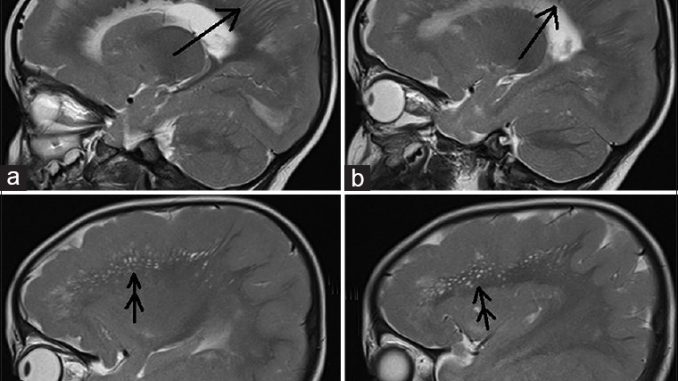
The correct diagnosis is "paracentral pachygyria", a mild form of Lissencephaly.

The term Perisylvan Syndrome refers to a similar malformation known as Polymicrogyria. So this is very similar, but not quite the same thing.

Hypotonic Cerebral Palsy is a non-specific label that could be used as a secondary diagnosis.

Continue reading "Corey's MRI Findings by Dr. Dobyns and Dr. Walsh" »

Lissencephaly Classifications

Lissencephaly comprises a group of malformations caused by altered neuronal migration. It pathologically involves agyria (total loss of gyri) and pachygyria (fewer, broadened gyri).

Lissencephaly is radiologically classified into six grades, depending on the relative amounts of agyria and pachygyria, and the presence or absence of heterotopy [6].

The most frequently used and revised classification of lissencephaly includes classical lissencephaly formerly called type I and cobblestone lissencephaly formerly called type II [6, 7 and 8].

Classical lissencephaly is characterized by the presence of agyria and represents as Miller–Dieker and Norman–Roberts syndromes. Agyric regions of the cerebral cortex pathologically reveal a loosely organized four-layer cortex compared to normal six layers. It usually represents as absent or hypoplastic corpus callosum, decreased size of cerebellar hemispheres and specific craniofacial anomalies.

Cobblestone lissencephaly includes a group of syndromes, Fukuyama congenital muscular dystrophy, Walker Warburg syndrome and muscle-eye-brain disease. It is characterized by an almost complete absence of cortical layer formation and associated with hydrocephalus, brain stem and cerebellum hypoplasia, congenital eye malformations and muscular dystrophy.

The term of formerly classified type IV lissencephaly is revised (Corey was given grade 4) and divided into microlissencephaly and LCH [7, 8 and 9].

LCH involves a heterogeneous group of cortical malformations without severe congenital microcephaly (>−3 SD), but some overlap between these two groups is also expected [1]. The major cause of this heterogeneity is different gene mutations, which are responsible for gross brain malformation involving both cerebral and cerebellar cortices [8, 9 and 10]. LCH was classified into six subgroups due to phenotypic and genetic properties [1, 9 and 11]. Although existence of some distinctive phenotypic features of these subgroups, there is also some overlap between them.

Continue reading "Lissencephaly Classifications" »

MRI change possible with Lissencephaly - Pachygyria

MR imaging of a patient with epilepsy and psychomotor retardation at 5 months revealed parieto-occipital pachygyria with almost normal cortical appearance and thickness in the frontal region; this appearance evolved into diffuse pachygyria at 7 years.

The change of the MR imaging findings may have resulted from myelination in the intracortical and subcortical fibers. It is important for clinicians to be aware of the longitudinal changes of the cerebral cortex in lissencephaly.

Continue reading "MRI change possible with Lissencephaly - Pachygyria" »

Ocular findings in lissencephaly

Ocular findings in lissencephaly

Journal of American Association for Pediatric Ophthalmology and Strabismus, Volume 7, Issue 3, June 2003, Pages 178-184
Naeem U. Nabi, Eedy Mezer, Susan I. Blaser, Alex A. Levin, J. Raymond Buncic

Abstract Purpose

To report our retrospective study of 20 cases with lissencephaly and describe ocular and visual abnormalities associated with this disorder.

Methods

Patients with lissencephaly were identified and classified into classic (type I) or cobblestone (type 2) lissencephaly on the basis of a review of clinical records and neuroimaging studies. Only patients examined by an ophthalmologist were included in the study.

Results

Only 1 patient had a normal ocular examination. Ocular abnormalities included optic nerve hypoplasia and atrophy, retinal dysplasia, retinal nonattachment, macular hypoplasia, anterior segment malformation, and strabismus.

Conclusions

Ocular abnormalities in classic (type 1) lissencephaly are less severe. Central, steady, and maintained fixation may be present despite the presence of optic nerve hypoplasia, optic atrophy, macular hypoplasia, strabismus, or refractive errors.

Retinal and anterior segment abnormalities were observed only in cobblestone (type 2) lissencephaly. These patients often have severe visual impairment because of retinal or cortical disease.

Continue reading "Ocular findings in lissencephaly" »

Bilateral posterior agyria–pachygyria and epilepsy

Bilateral posterior agyria–pachygyria and epilepsy

Brain and Development, Volume 25, Issue 2, March 2003, Pages 122-126

Roberto Horacio Caraballo, Ricardo Oscar Cersosimo, Alberto Espeche, Natalio Fejerman

Abstract

We analyzed the electroclinical findings in two patients with bilateral posterior agyria–pachygyria. Both patients presented with mental retardation, mild motor deficit and epilepsy. The electroclinical findings were characterized by frequent tonic or atonic generalized seizures with occasionally simple or complex partial seizures. Interictal electroencephalography (EEG) showed occipital spikes and diffuse polyspike-wave paroxysms predominantly in the posterior region. Ictal EEG showed diffuse 10–11 Hz activity. Cerebral magnetic resonance imagings (MRIs) showed thickened cortex in the parieto-occipital lobes, bilaterally and symmetrically. The volume of underlying white matter appeared reduced, and the overlying subarachnoid spaces were enlarged. The occipital horns were dilated. These findings were compatible with agyria–pachygyria of the posterior portions of the brain.

In conclusion, in patients with mental retardation, mild motor deficit and epilepsy characterized by tonic or atonic generalized seizures, interictal EEG with diffuse polyspike-wave paroxysms predominantly in posterior region, posterior focal epileptilorm abnormalities and ictal diffuse 10–11 Hz activity, bilateral parieto-occipital agyria–pachygyria should be considered as a possible etiology. Magnetic resonance image is the best neuroradiological study to identify this disorder of cortical development.

Continue reading "Bilateral posterior agyria–pachygyria and epilepsy" »

The MR evaluation of pachygyria and associated syndromes.

Eur J Radiol. 1991 Jan-Feb;12(1):53-9.
The MR evaluation of pachygyria and associated syndromes
Byrd SE, Osborn RE, Radkowski MA.

Department of Radiology, Children's Memorial Hospital, Northwestern University Medical School, Chicago, IL.

A retrospective study of 40 children with some form of pachygyria was performed at the Children's Memorial Hospital in Chicago. All 40 children had MR brain scans. We analyzed the MR findings, and correlated these findings with the clinical symptoms and course in all the children. We have autopsy findings in 15% these children. Based on our clinical, MR and autopsy findings, in conjunction with the medical literature, we found the following:

(1) Pachygyria can occur as an isolated entity without an association with lissencephaly. The MR findings in these children consisted of a brain that demonstrated normal opercularization with either focal or diffuse areas of pachygyria without areas of agyria. These children live longer and have less severity of symptoms than the children with lissencephaly.


(2) The MR findings in children with lissencephaly consisted of a brain that demonstrated abnormal opercularization with areas of total agyria or areas of agyria with pachygyria.

(3) The MR findings in 25% of our children with polymicrogyria simulated pachygyria. The MR findings of the brain in these children consisted of a 'nubby' appearance to the outer surface of these abnormal gyri which resembled pachygyria but on histologic exam was polymicrogyria.

PMID: 1999213 [PubMed - indexed for MEDLINE]

Continue reading "The MR evaluation of pachygyria and associated syndromes." »

October 11, 2009

Missing protein in rare genetic brain disorder restored

http://timesofindia.indiatimes.com/articleshow/4982318.cms

The Times of India ANI7 September 2009, 04:51pm IST

By using protease inhibitors, researchers at the University of California-San Francisco (UCSF) have restored to normal levels a key protein that

Missing protein in rare genetic brain disorder restored (Getty Images) is involved in early brain development, and causes the rare brain disorder lissencephaly.

Reduced levels of the protein called LIS1 have been shown to cause lissencephaly, which is characterized by brain malformations, seizures, severe mental retardation and very early death in human infants.

The findings in mice offer a proof-of-principle that the genetic equivalent to human lissencephaly, also known as "smooth brain" disease, can be treated during pregnancy and effectively reversed to produce more normal offspring.

The researchers are hoping that this approach could also be used to treat other defects in utero, or even those manifesting after birth, when caused by a partial deficiency in one gene, according to Dr. Anthony Wynshaw-Boris.

"Researchers have not considered it possible to treat such a pervasive, early developmental brain disorder as lissencephaly. Not only were we able to show a clear cellular effect from using these protease inhibitors, but also were able to treat the disorder in utero," Nature quoted Wynshaw-Boris as saying.

The work is the culmination of 15 years of collaborative research into the cause and mechanisms of lissencephaly, which is caused by a deletion or loss of one copy of the LIS1 gene, and affects an estimated one in 50,000-100,000 infants.
In 1998, the researchers reported of producing a mouse with the same mutation that displayed defective brain development.

The current research used these mice, and found that the protein calpain degrades the LIS1 protein to less than half its normal levels near the surface of the cells. The team then used a specific small-molecule protease inhibitor of calpain in these mice.

At a cellular level, the protease inhibitors enabled LIS1 protein to be expressed at near-normal levels. The team then gave daily injections of a calpain inhibitor to pregnant mice whose foetuses had the mouse-model of this defect. They observed that the resulting offspring had more normal brains and showed no sign of mental retardation.

"This study is really a proof-of-principle not only for treating complex developmental brain disorders, but also for any disorder with reduced protein levels where proteases normally play some role in breaking down that protein. This will be much more difficult to apply to humans, because of the safety issues involved, but it could lead to new therapies that might be effective for a wide range of developmental disorders," said the researchers.
The findings have been published in the journal "Nature Medicine".

March 18, 2009

Lissencephaly - Pachygyria Brain information

The variant of lissencephaly or pachygyria that Corey has is mild and does not relate to most of the lissencephaly information listed on the internet and that is why we have this website to let other parents in our situation know:

The mild variety of pachygyria has a full life expectancy.

The lissencephaly sites we found state the life expectancy is up to 20 years of age.
--------------------------------------------------------------------

I ran across this site with an actual picture of a pachygyria brain. It states it is fatal but I was told Corey's variant is not. A total of 13 brain malformations are included.
http://runzwithscissors.net/gallery/brains/pachygyria

http://www.neurology.org/cgi/content/abstract/01.wnl.0000183747.05269.2dv1

For description and resources:
http://www.memorialhermann.org/library/healthguide/en-us/illnessconditions/topic.asp?hwid=nord454

------------------------------------------------------------------------
Brain scans of Lissencephaly and information visit:
http://www.med.uc.edu/neurorad/webpage/cna.html
Discussion:
Lissencephaly is the most severe of the migrational anomalies. Affected individuals are profoundly mentally retarded and usually have severe seizure disorders. A global migrational abnormality is postulated, occurring between 11-26 weeks. The cortex is abnormally thickened and sulcation largely absent, with 2-4 instead of the normal 6 cell layers of cortex. Colpocephaly is usually present.
Types:
I-Miller-Deiker- assd with 17p-
------------------------------------------------------------------------

Genetic Testing for Pachygyria - Lissencephaly

What is Genetic Testing?

A genetic test is the analysis of human DNA, RNA, chromosomes, proteins, or certain metabolites in order to detect alterations related to a heritable disorder. This can be accomplished by directly examining the DNA or RNA that makes up a gene (direct testing), looking at markers co-inherited with a disease-causing gene (linkage testing), assaying certain metabolites (biochemical testing), or examining the chromosomes (cytogenetic testing). Selected methodology terms are used in the GeneTests Laboratory Directory.


Genetic Tests for PACHYGYIA or Lissencephaly 1 (LIS1)

These tests were completed on Corey through Emory and Univ. of Chicago.

TEST 1: Lissencephaly Type 1: Miller-Dieker is the first Chromosome 17 testing done on Corey at Emory University. This test came back normal for Corey. 2006 (If normal do test 2)

TEST 2: Sequencing of the LIS1 gene can only be done at the University of Chicago or at two labs in Germany. This test came back normal for Corey. 2007 (If normal do test 3)

TEST 3: MLPA-based dup/del test - The yield is high, at least 1/3 chance of finding an abnormality. This test came back normal for Corey. 2007 (He is now a candidate for the research program with Dr. Dobyns.)

All the testing required just one blood draw at Emory in Atlanta. It was about 4-5 vials of blood but went quickly. Emory was very helpful working with Univ. of Chicago and the billing. The in state work on test 1 was covered by insurance and medicaid. The other 2 tests out of state are billed to my insurance and the remainder paid by us.

------------------------------------------------------------------------

Chromosome 17 has the "address" to LIS 1. To learn more about chromosomes and genetic testing visit http://www.ornl.gov/sci/techresources/Human_Genome/posters/chromosome/diseaseindex.shtml#tests.
------------------------------------------------------------------------

Syndromes with lissencephaly. I:
Miller-Dieker and Norman-Roberts syndromes and isolated lissencephaly.

------------------------------------------------------------------------

Although genetic testing shares some features in common with other kinds of laboratory testing, in many ways it is unique and requires special considerations.

Continue reading "Genetic Testing for Pachygyria - Lissencephaly" »

Christopher A. Walsh Laboratory

Dr. Christopher Walsh and Dr. Bernard Chang are two of the three doctors that reviewed Corey's MRI for free and gave new diagnosis results. They are wonderful to work with and gave me information I really needed to know for Corey's care.


Christopher Walsh, MD, PhD
Chief, Genetics Department, Children's Hospital
Chief, Division of Neurogenetics at Beth Israel Deaconess Medical Center and Harvard Medical School.

Bernard Chang, MD
Neurologist at Beth Israel Deaconess Medical Center and Harvard Medical School.
(contacted through the Walsh Lab)

Continue reading "Christopher A. Walsh Laboratory" »

September 25, 2006

Dr. William Dobyns - Department of Human Genetics

University of Chicago - Department of Human Genetics laboratories specialize in customized diagnostics, translational research, and also offer routine molecular gentetic and cytogenetic testing. We offer prenatal, pediatric, adult, metabolic, neurogenetic, dysmorphology, brain malformation, and craniofacial genetic evaluations.

This is the only laboratory in the United States that does the genetic testing for LIS sequencing. Dr. Dobyns has been wonderful in diagnosing Corey's condition for free after reviewing his MRI film. He even contacted us on a holiday weekend. It turned out that the second MRI Corey had done was incorrectly diagnosed but was an easy mistake to make and may happen to alot of people.

Continue reading "Dr. William Dobyns - Department of Human Genetics" »

About Brain Malformation - Mild Lissencephaly - PACHYGYRIA

This page contains an archive of all entries posted to Candice Lange in the Brain Malformation - Mild Lissencephaly - PACHYGYRIA category. They are listed from oldest to newest.

About This Site - Contact Info is the previous category.

Donation Resources is the next category.

Many more can be found on the main index page or by looking through the archives.

Powered by
Movable Type 3.32

Copyright © 2006 by Candice Lange, All Rights Reserved