« October 2009 | Main | December 2009 »

November 2009 Archives

November 1, 2009

Respite Providers & Parent's Night Out

Special Needs Respite Providers & Parent's Night Out

Please contact the below events to confirm times and dates.
Membership in the churches is not required.
====================================================

AGAPE Respite at North Metro Baptist Church 2nd Monday of each month, 6:30 - 8:30pm
1026 Old Peachtree Road, Lawrenceville, in back of the parking lot to the gym "Lighthouse"
www.northmetro.net
Call the Special Needs Ministry at 770-995-9055 ext. 237 or agape@northmetro.net
AGAPE is a Free, Respite program for families of individuals with developmental disabilities, ages five through adult. The Purpose of AGAPE is to provide rest and encouragement for families and a safe, Christian fellowship for individuals with special needs. Fun, Christian fellowship with games, crafts, music and other activities centered on Bible truth and scripture. Dinner is provided and each person gets a "friend" for the whole night. Siblings are welcome if they are a helper.
--------------------------------------------------------------------

Hebron’s Parent’s Night Out for families with special needs children and siblings
2nd Saturday of each month, 5 - 9 pm
Hebron Church, 202 Hebron Church Road, Dacula, GA 30019 www.hebronchurch.org
RSVP: (678) 427-5833 Jessica Butterworth hebronspecialneeds@gmail.com

Hebron's Parent’s Night Out features FREE childcare by trained volunteers, lots of fun activities, crafts, refreshments and a safe Christian environment.
--------------------------------------------------------------------

FOCUS (Families of Children Under Stress)
Call (770) 234-9111, inquiry@focus-ga.org or visit www.focus-ga.org for the calendar, locations and more information.
FOCUS is a nonprofit organization that provides families with emotional, informational and physical support as a result of their children’s illness or disability. They provide respite in several locations around Georgia.

--------------------------------------------------------------------

First Baptist Snellville 1st Tuesday of each month, 5 to 7:30 pm - Dinner $3

2400 Main Street East, Snellville http://www.fbcsnell.org RSVP: (770) 978-7000
Hosts once a month respite program for the special needs population.

====================================================

First United Methodist Church of Lawrenceville

395 West Crogan St, Lawrenceville, GA 30045 RSVP: 770-963-0386 x116 Lisa Johnson http://www.fumclv.org/

Special Needs Respite is to provide rest for special needs parents and it is an opportunity for individuals with special needs to have activities and events created for them.
EQUATE is a monthly special needs youth ministry, during the school year, for high-functioning special needs students in 6th grade through 12th grade includes activities such as: Games, Crafts, Pizza, Music, Ice Cream, Basketball, Special Guests and More!!!

--------------------------------------------------------------------

Hope House Children’s Respite Center - WeCare Respite

7225 Lester Road, Union City, GA 30291 RSVP: (770) 969-8354 Marjorie Peterson
www.swchristiancare.org

WeCare Respite (To apply for respite care or to become a WeCare Respite Volunteer): offeringhope@swchristiancare.org

Respite care on a daily and/or 24 hour basis for medically fragile children.

--------------------------------------------------------------------

Saturday Respite - Hi-Hope Center 3rd Saturday of each month

Hi-Hope Service Center
 882 Hi-Hope Road
Lawrenceville, Ga 30043
Register: www.atl-spectrum.com/socialgroupsactivities.html
For more information: info@atl-spectrum.com 404-634-4222

Hi-Hope Center is bustling with activity. In collaboration with Georgia Community Support and Solutions and Spectrum Autism Group, Hi-Hope provides the activity rooms, nursing staff and custodian so children and adults with developmental disabilities can participate in activities from noon until 6:00 p.m.
Volunteers are needed for each session and should call Hi-Hope at 770-963-8694 to sign up to help.
--------------------------------------------------------------------

Georgia Community Support & Solutions
404-634-4222 www.gacommunity.org

Non-profit organization that provides supports and services throughout greater metro Atlanta for children and adults with disabilities; mental health, emotional or substance abuse issues. This service awards 300 hours in the fiscal year used at anytime assessed on a sliding fee scale based on your income. They have respite providers or you can have your own approved through them for fee assistance. Approval for this respite is required.

Respite@gacommunity.org advocacy@gacommunity.org familysupport@gacommunity.org

--------------------------------------------------------------------

Note: Many of the churches above also have special needs Sunday school and Wednesday night programs. Many also provide special assistance during services through sign translation and any other services required. Call the church to ask what they offer.

This list may be printed and distributed with permission listed from www.candicelange.com. Thank you.

November 2, 2009

Good Site for Georgia Resources

http://www.yellowpagesforkids.com/help/ga.htm

November 21, 2009

The MR evaluation of pachygyria and associated syndromes.

Eur J Radiol. 1991 Jan-Feb;12(1):53-9.
The MR evaluation of pachygyria and associated syndromes
Byrd SE, Osborn RE, Radkowski MA.

Department of Radiology, Children's Memorial Hospital, Northwestern University Medical School, Chicago, IL.

A retrospective study of 40 children with some form of pachygyria was performed at the Children's Memorial Hospital in Chicago. All 40 children had MR brain scans. We analyzed the MR findings, and correlated these findings with the clinical symptoms and course in all the children. We have autopsy findings in 15% these children. Based on our clinical, MR and autopsy findings, in conjunction with the medical literature, we found the following:

(1) Pachygyria can occur as an isolated entity without an association with lissencephaly. The MR findings in these children consisted of a brain that demonstrated normal opercularization with either focal or diffuse areas of pachygyria without areas of agyria. These children live longer and have less severity of symptoms than the children with lissencephaly.


(2) The MR findings in children with lissencephaly consisted of a brain that demonstrated abnormal opercularization with areas of total agyria or areas of agyria with pachygyria.

(3) The MR findings in 25% of our children with polymicrogyria simulated pachygyria. The MR findings of the brain in these children consisted of a 'nubby' appearance to the outer surface of these abnormal gyri which resembled pachygyria but on histologic exam was polymicrogyria.

PMID: 1999213 [PubMed - indexed for MEDLINE]

Continue reading "The MR evaluation of pachygyria and associated syndromes." »

Bilateral posterior agyria–pachygyria and epilepsy

Bilateral posterior agyria–pachygyria and epilepsy

Brain and Development, Volume 25, Issue 2, March 2003, Pages 122-126

Roberto Horacio Caraballo, Ricardo Oscar Cersosimo, Alberto Espeche, Natalio Fejerman

Abstract

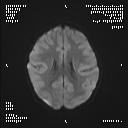
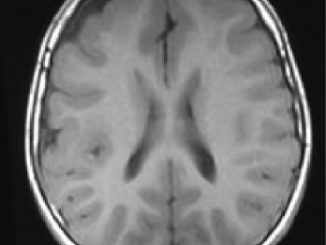
We analyzed the electroclinical findings in two patients with bilateral posterior agyria–pachygyria. Both patients presented with mental retardation, mild motor deficit and epilepsy. The electroclinical findings were characterized by frequent tonic or atonic generalized seizures with occasionally simple or complex partial seizures. Interictal electroencephalography (EEG) showed occipital spikes and diffuse polyspike-wave paroxysms predominantly in the posterior region. Ictal EEG showed diffuse 10–11 Hz activity. Cerebral magnetic resonance imagings (MRIs) showed thickened cortex in the parieto-occipital lobes, bilaterally and symmetrically. The volume of underlying white matter appeared reduced, and the overlying subarachnoid spaces were enlarged. The occipital horns were dilated. These findings were compatible with agyria–pachygyria of the posterior portions of the brain.

In conclusion, in patients with mental retardation, mild motor deficit and epilepsy characterized by tonic or atonic generalized seizures, interictal EEG with diffuse polyspike-wave paroxysms predominantly in posterior region, posterior focal epileptilorm abnormalities and ictal diffuse 10–11 Hz activity, bilateral parieto-occipital agyria–pachygyria should be considered as a possible etiology. Magnetic resonance image is the best neuroradiological study to identify this disorder of cortical development.

Continue reading "Bilateral posterior agyria–pachygyria and epilepsy" »

Ocular findings in lissencephaly

Ocular findings in lissencephaly

Journal of American Association for Pediatric Ophthalmology and Strabismus, Volume 7, Issue 3, June 2003, Pages 178-184
Naeem U. Nabi, Eedy Mezer, Susan I. Blaser, Alex A. Levin, J. Raymond Buncic

Abstract Purpose

To report our retrospective study of 20 cases with lissencephaly and describe ocular and visual abnormalities associated with this disorder.

Methods

Patients with lissencephaly were identified and classified into classic (type I) or cobblestone (type 2) lissencephaly on the basis of a review of clinical records and neuroimaging studies. Only patients examined by an ophthalmologist were included in the study.

Results

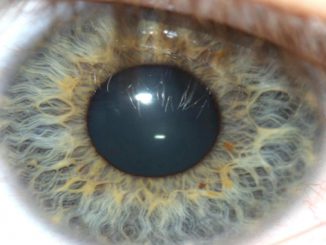
Only 1 patient had a normal ocular examination. Ocular abnormalities included optic nerve hypoplasia and atrophy, retinal dysplasia, retinal nonattachment, macular hypoplasia, anterior segment malformation, and strabismus.

Conclusions

Ocular abnormalities in classic (type 1) lissencephaly are less severe. Central, steady, and maintained fixation may be present despite the presence of optic nerve hypoplasia, optic atrophy, macular hypoplasia, strabismus, or refractive errors.

Retinal and anterior segment abnormalities were observed only in cobblestone (type 2) lissencephaly. These patients often have severe visual impairment because of retinal or cortical disease.

Continue reading "Ocular findings in lissencephaly" »

MRI change possible with Lissencephaly - Pachygyria

MR imaging of a patient with epilepsy and psychomotor retardation at 5 months revealed parieto-occipital pachygyria with almost normal cortical appearance and thickness in the frontal region; this appearance evolved into diffuse pachygyria at 7 years.

The change of the MR imaging findings may have resulted from myelination in the intracortical and subcortical fibers. It is important for clinicians to be aware of the longitudinal changes of the cerebral cortex in lissencephaly.

Continue reading "MRI change possible with Lissencephaly - Pachygyria" »

Lissencephaly Classifications

Lissencephaly comprises a group of malformations caused by altered neuronal migration. It pathologically involves agyria (total loss of gyri) and pachygyria (fewer, broadened gyri).

Lissencephaly is radiologically classified into six grades, depending on the relative amounts of agyria and pachygyria, and the presence or absence of heterotopy [6].

The most frequently used and revised classification of lissencephaly includes classical lissencephaly formerly called type I and cobblestone lissencephaly formerly called type II [6, 7 and 8].

Classical lissencephaly is characterized by the presence of agyria and represents as Miller–Dieker and Norman–Roberts syndromes. Agyric regions of the cerebral cortex pathologically reveal a loosely organized four-layer cortex compared to normal six layers. It usually represents as absent or hypoplastic corpus callosum, decreased size of cerebellar hemispheres and specific craniofacial anomalies.

Cobblestone lissencephaly includes a group of syndromes, Fukuyama congenital muscular dystrophy, Walker Warburg syndrome and muscle-eye-brain disease. It is characterized by an almost complete absence of cortical layer formation and associated with hydrocephalus, brain stem and cerebellum hypoplasia, congenital eye malformations and muscular dystrophy.

The term of formerly classified type IV lissencephaly is revised (Corey was given grade 4) and divided into microlissencephaly and LCH [7, 8 and 9].

LCH involves a heterogeneous group of cortical malformations without severe congenital microcephaly (>−3 SD), but some overlap between these two groups is also expected [1]. The major cause of this heterogeneity is different gene mutations, which are responsible for gross brain malformation involving both cerebral and cerebellar cortices [8, 9 and 10]. LCH was classified into six subgroups due to phenotypic and genetic properties [1, 9 and 11]. Although existence of some distinctive phenotypic features of these subgroups, there is also some overlap between them.

Continue reading "Lissencephaly Classifications" »

Corey's MRI Findings by Dr. Dobyns and Dr. Walsh

Corey's MRI was originally read as Perisylvian Syndrome. However, I heard Dr. Dobyns and Dr. Walsh evaluated MRIs for free and knew we needed another opinion. Corey had received quite a few diagnoses by this time. If you are needing the results quickly you can pay for a full report.

I suggest to everyone who contacts me through this site to get a second opinion with the Dr. Dobyns and Dr. Walsh.

One, you need to know what your child really has as a diagnosis.

Two, these doctors are world experts on Pachygyria and Lissencephaly. It is very useful for them to know how many children have Pachygyria and Lissencephaly as it is so rare.

Three, it is possible your child can be in the studies and have further testing through one blood draw. We had 2 genetic tests done through our insurance and Katie Becket medicaid. The other 2 tests were done for free in the research studies. The other tests used blood drawn on the first genetic tests.

------------------------------------------------------------------------

Email clippings from Dr. Dobyns at University of Chicago for Corey in 2006-2007

The correct diagnosis is "paracentral pachygyria", a mild form of Lissencephaly.

The term Perisylvan Syndrome refers to a similar malformation known as Polymicrogyria. So this is very similar, but not quite the same thing.

Hypotonic Cerebral Palsy is a non-specific label that could be used as a secondary diagnosis.

Continue reading "Corey's MRI Findings by Dr. Dobyns and Dr. Walsh" »

Articles about Pachygyria and Brain Malformations

http://www.sciencedirect.com/science?_ob=ArticleListURL&_method=list&_ArticleListID=1103663556&_acct=C000050221&_version=1&_urlVersion=0&_userid=10&md5=7a348dc2eca62df6a8a556121cf1a767


http://stanford.wellsphere.com/wellmix360/pachygyria

About November 2009

This page contains all entries posted to Candice Lange in November 2009. They are listed from oldest to newest.

October 2009 is the previous archive.

December 2009 is the next archive.

Many more can be found on the main index page or by looking through the archives.

Powered by
Movable Type 3.32

Copyright © 2006 by Candice Lange, All Rights Reserved